Criminal Case
- 4.6
- Rating
- 100.00M
- Installs
- Free
- Price

 Analysis by App-foxy
I spent time with Criminal Case as a mobile adventure game built around crime investigation. Its basic appeal is easy to understand: you examine scenes, look for clues, follow a case, and gradually piece together what happened. That sounds simple, but the experience depends heavily on whether you enjoy careful observation, repeated searches, and a steady stream of short sessions rather than fast action or open-ended exploration.
What surprised me most is how clearly the game aims at the casual detective audience. It is not trying to be a demanding simulation of police work, and it does not ask you to manage a complicated inventory or solve every mystery through free-form deduction. Instead, it turns investigation into a sequence of approachable tasks. I found that structure convenient when I wanted something light, but it also made the game feel more repetitive whenever I played for too long in one sitting.
How the investigation works in everyday play
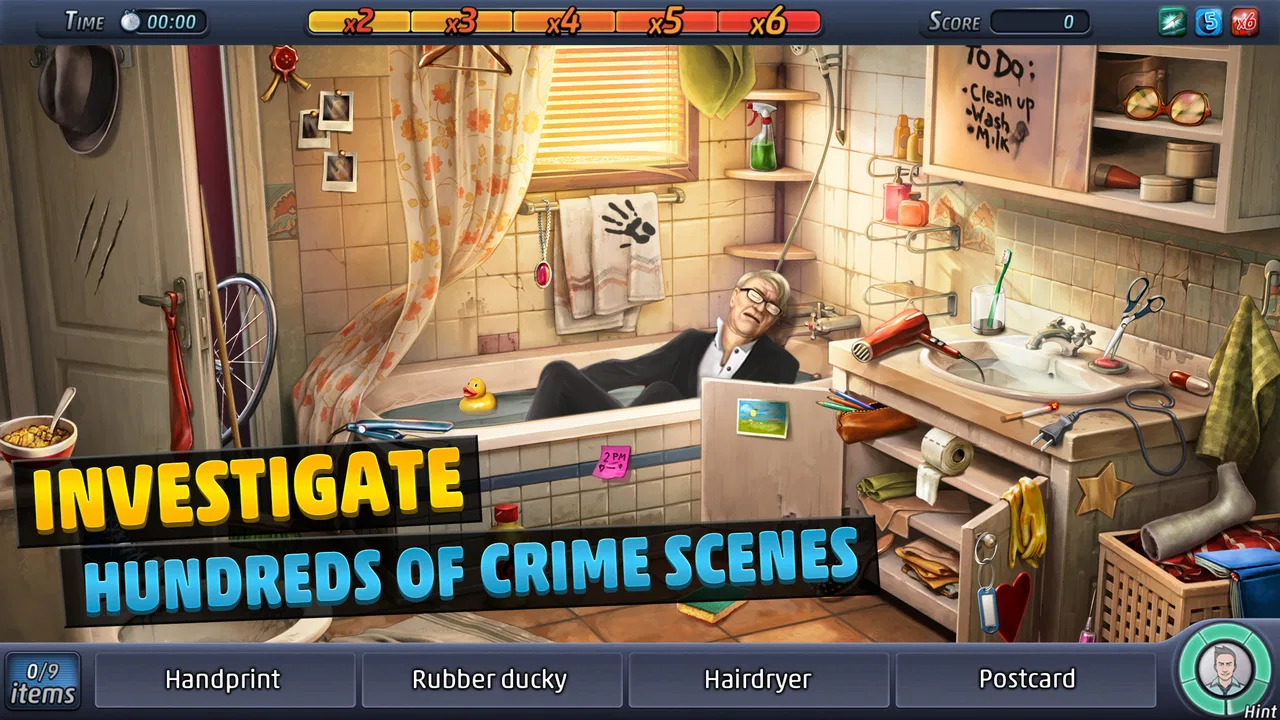
The core rhythm is familiar after a few minutes. A case introduces a crime, I visit an investigation scene, and I search the image for objects that matter. Each discovery moves the story forward, while later steps bring in more examination and decision-making. The satisfaction comes from recognizing a useful detail in a busy scene, especially when I have been scanning the same area without noticing it.
You May Also Like

 AccuWeather: Weather Radar
AccuWeather Review: A Quick, Clear Forecast for Everyday Decisions
For everyday plans, the best forecast is the one you can understand quickly. AccuWeather makes rain timing, radar, and local conditions easy to act on, with a few trade-offs.

 Hill Climb Racing
Why Hill Climb Racing Still Turns Crashes Into One More Run
A tiny car, a bumpy hill and one more upgrade: Hill Climb Racing keeps resurfacing because its simple chaos makes every near-miss feel personal.

 AliExpress - Shopping App
AliExpress Makes Global Shopping Feel Personal, but Shoppers Bear the Risk
AliExpress turns a global marketplace into a pocket-sized discovery engine. Its reach is useful, its shopping loop compelling, and its trade-offs easy to miss.

 Lords Mobile: Kingdom Wars
Lords Mobile Is a Kingdom-Building Routine, Not a Quick Match
A case-by-case verdict on the building, battles, device demands, and social commitments that make Lords Mobile rewarding for some players and exhausting for others.

 PDF Scanner app - TapScanner
TapScanner Makes Paperwork Easier to Capture, Check, and Share
TapScanner makes scanning with a phone feel less like a rescue operation and more like a dependable step in getting work done. Its capture tools are useful, though not flawless.

 Block Blast!
 Shows How Much a Puzzle Game Can Leave Out
A quiet grid game shows why puzzle players increasingly value instant clarity, repeatable skill and low-pressure play—and where the genre still needs to catch up.
More From Our News Desk
View All News


This is a good fit for short breaks. I can play while waiting for an appointment, during a commute with a reliable connection, or at the end of the day when I want a guided activity rather than a game that demands constant concentration. The individual actions are easy to understand, so the learning curve is gentle. Someone who rarely plays mobile games can pick it up without first studying a long tutorial.
At the same time, the investigation is more about observation and progression than about inventing theories. The game usually points me toward the next stage, and the challenge comes from finding the required details efficiently. Players expecting the freedom of a traditional point-and-click adventure may find that limiting. I never felt completely lost, but I also did not feel that every conclusion came from my own independent reasoning.
The visual scenes are designed to support hidden-object play, which means patience matters more than reflexes. I learned to scan in a consistent pattern instead of tapping randomly. Moving from the upper corners across the center and then checking the edges reduced the time I spent overlooking small items. That simple habit is one of the most useful ways to make the game feel less frustrating.
Another practical tip is to avoid treating every scene as a race. When I rushed, I often tapped near an object without hitting it and then had to search again. Slowing down for a careful pass was usually faster than repeatedly guessing. This is especially helpful on a smaller phone screen, where details can blend into the background.
A story-led format with a casual pace
The crime theme gives the searches a reason to exist. Instead of looking for unrelated objects with no context, I am working through a case and seeing how each piece fits into the investigation. That framing makes the repeated scene work more enjoyable than a collection of disconnected puzzles would be. I also liked having a continuing sense of progress, because finishing one stage encourages me to see what the next discovery reveals.
Still, the narrative should be approached as light entertainment rather than a deeply interactive detective novel. The game controls the direction of the investigation, and the player’s role is mainly to complete the tasks presented. That makes it accessible, but it reduces the impact of choices for anyone who wants several radically different outcomes or a mystery that can be solved in many ways.
For me, the best sessions were the ones where I played one or two stages and stopped. The format works well in small portions because each visit has a clear objective. Longer sessions expose the repeated structure more quickly, and the same type of searching can begin to feel like work. I would not choose it as my main game for an entire evening unless I was particularly in the mood for hidden-object investigation.
What the free entry actually means
The game is free to download and play, which makes trying it straightforward. That matters here because the appeal is quite specific: some people will enjoy the crime scenes immediately, while others will find the search-based progression too repetitive. Free access lets you judge that for yourself before spending anything.
There are in-app purchases ranging from $0.99 to $99.99 per item. I would therefore treat the free starting point and optional spending as two separate questions. You can begin without paying, but a player who wants to move through the game faster or avoid waiting may feel more pressure to consider purchases. I prefer to decide in advance whether I am comfortable progressing at the free pace, rather than buying impulsively because I want to finish a case immediately.
The most sensible value test is simple: play enough to see whether the investigation loop remains enjoyable after the first impression. If searching scenes still feels satisfying when the novelty fades, the free access may be enough for a relaxed player. If the main attraction is completing cases quickly, the purchase range becomes more important, because convenience spending can change the overall value of the experience.
I would not describe the game as a paid premium adventure with every part available upfront. Its value comes from the amount of casual investigation it offers without an entry price, balanced against the possibility that progress can feel less comfortable for players who dislike waiting or optional spending. That distinction is important when comparing it with a one-time purchase game that offers a more fixed, self-contained experience.
Where it sits beside other mystery games
Compared with a traditional point-and-click adventure, this game is easier to enter and more predictable in its structure. A classic adventure may ask me to combine objects, interpret dialogue, and discover solutions through experimentation. Here, the hidden-object investigation is more immediate. I spend less time wondering what the designers expect me to do and more time examining the current scene.
Compared with a pure hidden-object title, the crime framework gives the searches more continuity. The case structure makes each location feel connected to a broader question, even though the actual interaction remains focused. That makes it a better choice for someone who wants a little story around object-finding, but not necessarily for a player seeking elaborate logic puzzles.
It also differs from action-oriented adventure games. There is no reason to choose it if your priority is combat, rapid movement, or a large world to explore at your own pace. Its strength is controlled progression. I always know roughly what kind of task I am facing, which is comforting when I want a low-pressure game, but less exciting when I want surprise and mechanical variety.
The less obvious strengths and friction points
One strength is how well the game turns visual attention into a repeatable skill. I became better at identifying the kinds of details that tend to disappear into a crowded scene: objects partly covered by scenery, items placed near similar colors, and clues that sit close to the border of the image. That improvement is modest, but it gives the searches a sense of personal progress beyond simply unlocking the next part of a case.
A second strength is its suitability for interrupted play. Because the game is organized around individual investigation steps, I do not need to reserve a long uninterrupted block of time. I can stop after completing a task and return later without having to remember a complicated control scheme. For a phone game, that practical convenience is more valuable than flashy presentation.
A third insight is that the game rewards a calm search method more than fast tapping. Players who assume speed is everything may create their own difficulty. I found it better to inspect the whole composition, use a repeatable sweep, and only then focus on the stubborn areas. This approach also makes the experience more accessible to people who do not have quick reactions but are comfortable with visual concentration.
The main friction is repetition. The investigation format is clear, but clarity can become predictability. If you dislike looking through similar scenes or repeating a familiar task to advance a story, the crime theme may not be enough to keep you interested. The game also has less appeal for players who want their deductions to reshape the narrative, because the progression is guided rather than fully open.
Another trade-off is the relationship between patience and spending. Since the game is free to start but offers purchases, the most economical approach is to accept a slower, more casual rhythm. Players who want uninterrupted progress may view that rhythm as an obstacle. I would not recommend installing it with the assumption that every player will experience the same pace or the same value from the optional purchase system.
Who will get the most from it?
I would recommend it to someone who enjoys crime stories, hidden-object puzzles, and mobile games that can be played in brief sessions. It is especially suitable for a friend who wants an uncomplicated distraction with a clear objective. The Teen content rating also makes it more appropriate for older players than for young children, so I would keep that audience guidance in mind when choosing it for a family device.
It can also work for people who enjoy improving their visual-search technique. The game is not a formal training tool, but it naturally rewards scanning, patience, and attention to small details. I found that the best experience came from treating each scene like a visual checklist rather than tapping wherever something looked suspicious.
I would suggest skipping it if you need a game with deep branching decisions, complex deduction, or constant novelty. It is also a poor match for anyone who strongly dislikes optional purchases in free-to-play games, even when they can begin without paying. In that situation, a paid adventure with a fixed cost may feel more comfortable because its value is easier to judge upfront.
Likewise, action fans should look elsewhere. The crime setting may sound intense, but the actual play is measured and observational. The game is about examining evidence and advancing through cases, not controlling a character through fast danger. That difference between theme and mechanics is worth understanding before downloading it.
Device expectations and current details
The game is available for Android devices running at least Android 6.0. That makes it approachable for people using older supported phones, although the personal experience will still depend on screen size and general device condition. A larger display can make small objects easier to identify, while a compact screen may require more concentration during crowded scenes.
Pretty Simple is the developer behind the game. It has reached over 100 million installs, with a 4.6 average from around 4.3 million ratings and roughly 109 thousand written reviews. Those figures show that the title has found a very large audience, but popularity does not remove the central question: whether you personally enjoy its repeated investigation loop.
The current version is 2.44.3, and the game was released on April 15, 2015. Its long presence on mobile gives it the feel of an established casual title rather than a new experiment. I would still judge it by the way it plays on my own device and by my tolerance for its pace, rather than assuming that a large audience guarantees a perfect match.
My recommendation after playing
My final view is positive, with a clear condition: Criminal Case is worth trying when you want relaxed, story-framed hidden-object investigation. The free entry makes that recommendation easy, because you can discover whether the scenes and case progression suit you without committing to a purchase.
I would keep my expectations realistic. This is not the right choice for a fully flexible detective simulation, a premium one-time adventure, or an action game. Its strongest qualities are accessibility, short-session convenience, and the small satisfaction of finding details that initially hide in plain sight. Its weakest qualities are repetition and the possibility that players seeking faster progress may feel tempted by the available purchases.
If I were recommending it to a friend, I would say: install it when you want a casual mystery to dip into, play with a patient scanning routine, and decide early whether the free pace feels comfortable. If it does, the game can provide a substantial stream of light investigations. If it does not, spending more is unlikely to fix a mismatch with the basic gameplay. For the right player, it is an easygoing crime adventure; for everyone else, a more puzzle-focused or fixed-price alternative will probably deliver better value.
FAQs for Criminal Case
01What is the main objective of Criminal Case?
Criminal Case is a hidden object adventure game where players take on the role of a detective to solve various murder mysteries. The primary objective is to investigate crime scenes, collect clues, and analyze evidence to identify suspects and ultimately solve the case. The game combines puzzle-solving with engaging storylines.
02Is Criminal Case free to play?
Yes, Criminal Case is free to download and play on both Android and iOS devices. However, it includes optional in-app purchases that can enhance the gameplay experience. These purchases may include items like extra energy, hints, or other game-related advantages. Players can choose to play entirely for free or make purchases as desired.
03What are the system requirements for Criminal Case?
To play Criminal Case smoothly, you need a device running Android 4.4 or later, or iOS 9.0 or later. The game requires a stable internet connection to download updates and access online features. Additionally, having a device with decent processing power will help prevent any lag during gameplay.
04How does the energy system work in Criminal Case?
In Criminal Case, energy is required to investigate crime scenes. Players start with a set amount of energy that depletes with each action. Energy replenishes over time, or it can be refilled instantly through in-app purchases. Managing energy wisely is crucial for progressing through the game without delays.
05Can I play Criminal Case with friends?
Yes, Criminal Case allows you to connect with friends via Facebook. This feature enables players to share and receive gifts, such as extra energy or hints, which can aid in solving cases. Collaborating with friends can enhance the social aspect of the game and make the experience more enjoyable.
Pros
- Engaging storyline with multiple plot twists.
- Variety of crime scenes keeps gameplay fresh.
- Excellent graphics and immersive sound effects.
- Intuitive controls make it easy to navigate.
- Regular updates with new content and cases.
Cons
- Energy system limits continuous play.
- In-app purchases can be costly.
- Repetitive tasks may become monotonous.
- Occasional long load times.
- Requires constant internet connection.

Criminal Case
Gallery